Hyperliquid Builder Fees Explained - What Third-Party Apps Charge to Route Your Orders
Table of Contents
 Hyperliquid
Someone Else's Interface, Hyperliquid's Order Book
More than 100 teams now route orders into Hyperliquid without running an exchange. You can open a perp from inside  Phantom, from
  MetaMask, from a bridge aggregator, or from an AI chat app on your phone. The order goes to the same HyperCore order book either way. The fill is identical.
The difference is the fee. Every one of those apps is attaching a builder code to your order, and that code takes a cut.
Warning
How the Mechanism Works
The design is deliberately narrow. A builder cannot silently skim from you, and it cannot charge whatever it wants.
1. You approve the builder. Before any app can charge you, you sign an ApproveBuilderFee action with your main wallet, not an API or agent wallet. The prompt names the builder address and the maximum fee it may charge. This is the moment to actually read the number.
2. The app tags each order. Once approved, the app attaches a builder parameter to every order it sends: the builder's address plus a fee expressed in tenths of a basis point. If the app tags a higher fee than you approved, the order is rejected.
3. The fee comes out of the quote asset. Builder fees are collected in USDC on perps and in the collateral asset on spot. On spot markets the fee only applies to the selling side, so buying is untouched.
4. Builders claim through the referral flow. Accrued builder fees are withdrawn through the same rewards process as referral earnings, and every fill is published in a daily CSV per builder address, which is why the revenue leaderboards below are public rather than self-reported.
| Rule | Limit |
|---|---|
| Max perp builder fee | 0.1% |
| Max spot builder fee | 1% (sell side only) |
| Approvals per user | 10 active builders |
| Builder account minimum | 100 USDC in perps account value |
| Signature required | Main wallet, not agent wallet |
Info
What It Actually Costs You
This is the part most traders never check. Hyperliquid's base perp fees are 0.045% taker and 0.015% maker. A 0.05% builder fee, which is what Phantom charges, more than doubles the cost of a taker fill.
| Route | Taker fee on a $10,000 perp trade |
|---|---|
| Direct on Hyperliquid, base tier | $4.50 |
| Direct with the 4% referral discount | $4.32 |
| Through a 0.05% builder | $9.50 |
| Through a builder at the 0.1% cap | $14.50 |
Over a single trade that is lunch money. Over $1 million of monthly volume at 0.05%, the builder fee alone is $500 a month, and it does nothing to move you up Hyperliquid's VIP fee tiers because it is not protocol volume revenue.
Tip
Skip the Middleman Fee
Trade directly on Hyperliquid with no builder surcharge, and stack a 4% discount on your first $25M of volume on top of the base rate.
Join Hyperliquid - Save 4%Who Is Actually Earning This
Builder codes turned out to be one of Hyperliquid's more successful distribution decisions. The top ten builders have cleared more than $63.5 million in cumulative revenue, and over 100 teams have integrated.
| Builder | Cumulative revenue |
|---|---|
| Phantom | $20.6M |
| BasedOneX | $15.1M |
| PVP | $8.0M |
MetaMask, Insilico, Infinex, Axiom (Axiompedia's Axiom fees breakdown covers its perps pricing), Tread.Fi, Dreamcash, and Mass round out the top ten.
Phantom is the instructive case. It processed $37 billion in perpetual volume in under a year without building an exchange, a matching engine, or a liquidity program. It shipped a trading tab into a wallet 137,000 people already had open, charged them 0.05%, and averaged about $150 of revenue per user.
Recent Integrations Worth Knowing About
 Oku
Oku
Oku added Hyperliquid perps in July 2026. Its angle is funding: you can enter a position with assets sitting on Bitcoin, Solana, Ethereum, or 30-plus other chains, because Oku is a bridge and swap aggregator first and a perps frontend second. It routes through more than 20 DeFi tools including LiFi, Relay, CoW Swap, 0x, Kyber, and 1inch, and offers leverage on crypto, stocks, ETFs, commodities, and indices, up to 50x on the markets that allow it (crypto tops out at 40x, on BTC).
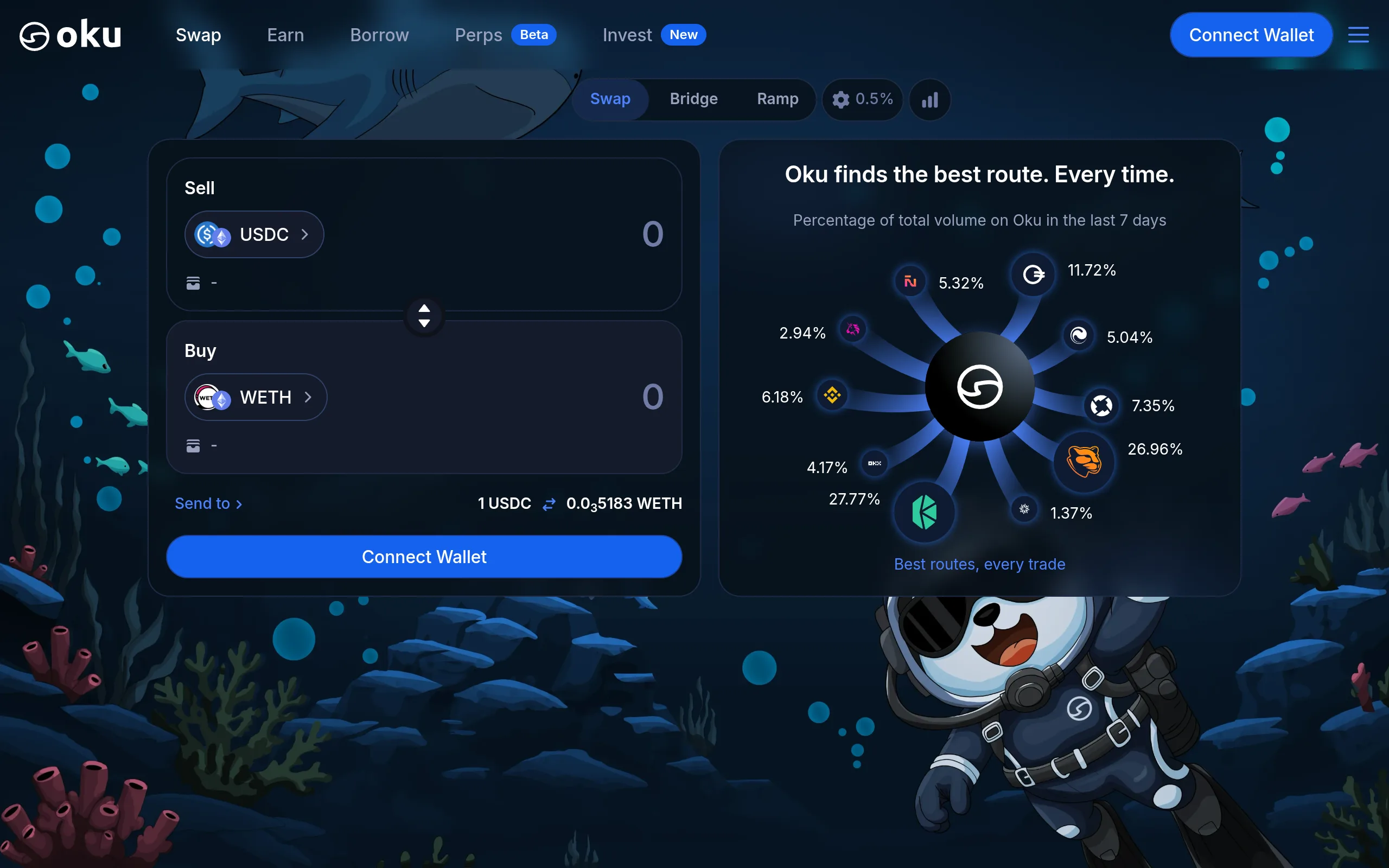
If you hold most of your capital outside the Hyperliquid ecosystem, this removes the bridging step that usually comes first.
 Talis
Talis
Talis is an AI trading app that went live on iOS in July 2026. You describe a position in plain language and it builds and tracks the strategy, executing non-custodially against Hyperliquid. It bundles a strategy builder, a market assistant for scenario work, and performance tracking on the strategies you save.

It is a genuinely different interface model from an order book, and worth a look if you already think about positions in sentences rather than in limit prices. Our mobile trading guide covers the more conventional iOS and Android options.
 Base App
The biggest name to arrive so far. Base App, Coinbase's consumer trading app, added perpetual futures in August 2026, and Hyperliquid's own weekly update confirmed the integration runs through builder codes. Eligible users get up to 50x leverage across more than 290 markets, including the stock and commodity perps that live on HIP-3 deployments.
The interface stays inside Base App. Matching, margin, and liquidation all happen on HyperCore, the same order book you would hit trading directly. Per reporting on the launch, the perps product is not offered to users in the US, UK or Canada.
This is the Phantom playbook at a larger scale: an app with an existing audience adds a trading tab rather than building an exchange. What it means for you as a trader is unchanged from every other builder integration on this page. You are paying a surcharge on top of Hyperliquid's base fees for the convenience of not leaving the app you were already in. If you would rather not, trading directly costs nothing extra.
 Ult
Ult
Ult is a self-custody app for trading stocks, crypto and prediction markets, and its X profile says it is powered by  Crypto.com. On September 26, 2026 it posted that it "routes perps through Hyperliquid," with up to 40x buying power where the feature is available, and Hyperliquid's weekly update listed it among the builder-code integrations. You sign in with a Google or Apple account rather than a seed phrase.
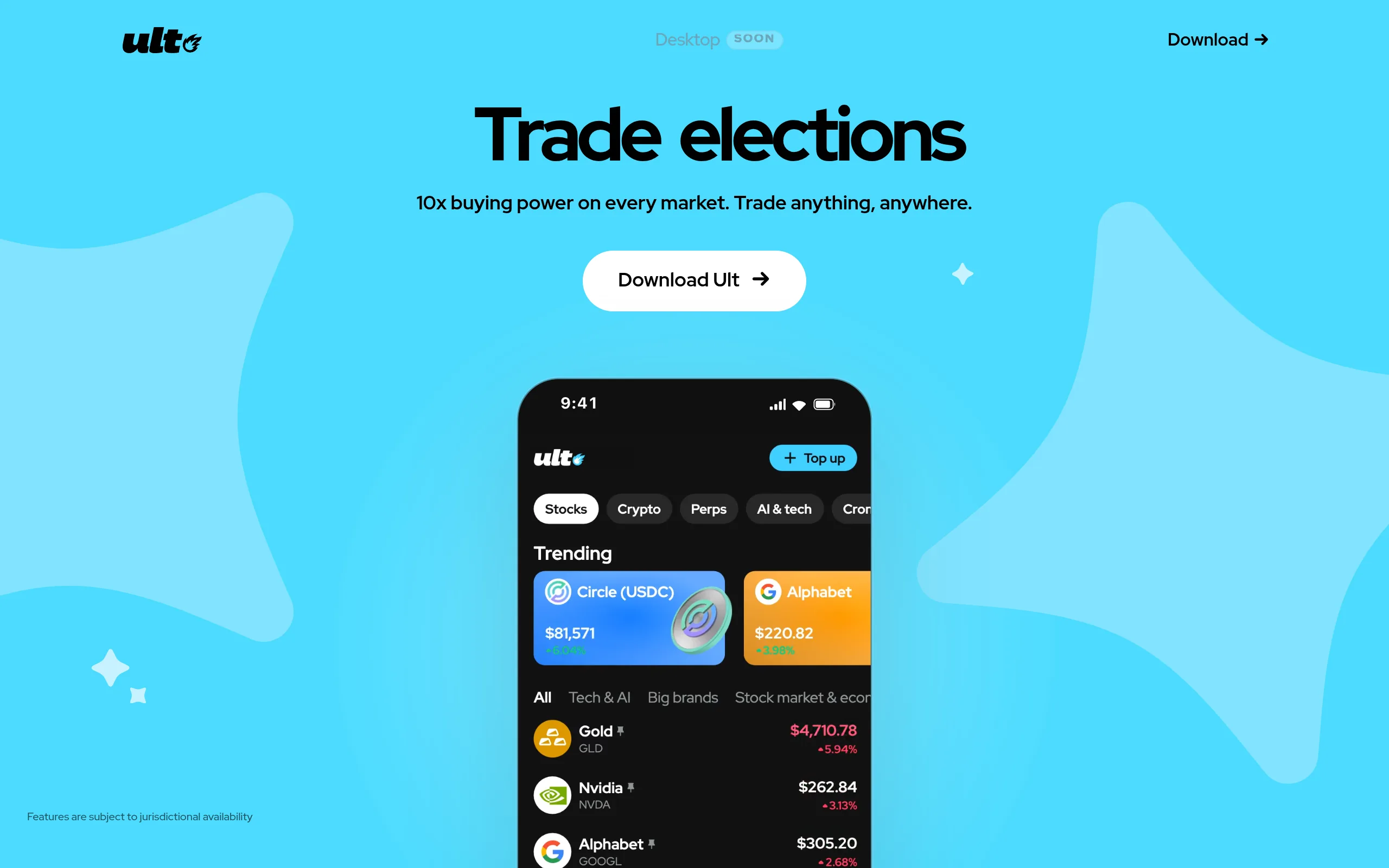
Two things to check before using it. The 40x is a ceiling, and on Hyperliquid only BTC reaches it among native crypto perps, so most markets will offer less. And Ult has not published its builder fee, so read the approval prompt before you sign it. If you want the version of this story aimed at funds rather than phone apps, our page on Bloomberg, Copper and Paxos covers the institutional routes that arrived the same week.
 Xverse
Xverse is a Bitcoin wallet that says it has nearly 2 million users. On October 8, 2026 it announced perps in its iOS and Android apps, "powered by Hyperliquid," and Hyperliquid's weekly update listed it among the builder-code integrations. In the app you go to Trade, then Perps.
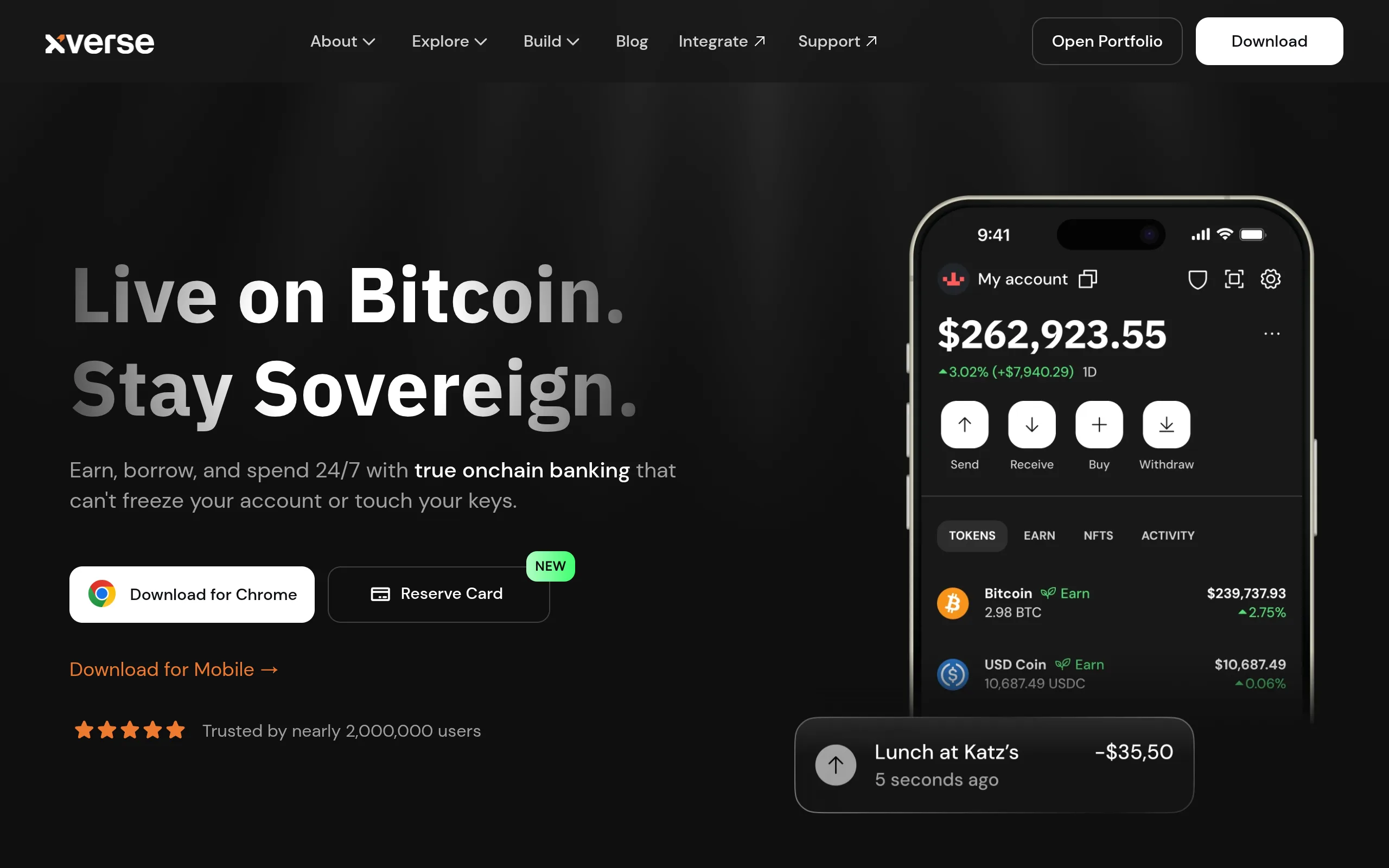
Source: Xverse, used under fair use for educational purposes
The new part is funding. Xverse's perps guide says you can send BTC straight from your Xverse wallet and the app converts and bridges it for you. You can also use USDC on Starknet held in its Xverse Cash account, which you can top up by bank transfer, card or Apple Pay. Either way you never handle a bridge yourself. The launch post also lists stock, commodity and currency perps. On Hyperliquid those are HIP-3 markets deployed by builders such as trade.xyz, not by Hyperliquid itself.
The usual checks apply. BTC goes up to 40x, which is Hyperliquid's own cap, and at launch the guide says only market orders are supported, with stop loss and take profit set when you open. Xverse has not published its builder fee, so read the approval prompt. Xverse also says perps are not available in the US and some other regions.
 Not All Integrations Are Builder Codes
Worth repeating, because it is the most common mix-up: trade.xyz is not a builder-code integration. It is a HIP-3 deployer that stakes HYPE and runs its own markets, which is why you find CXMT, SpaceX, and commodity perps there and nowhere else. Builder codes route into existing books. HIP-3 creates new ones.
How to Check and Revoke Your Approvals
Approvals persist. Trading somewhere else does not cancel them, and most people have no idea how many they have accumulated.
Count your approvals
Hyperliquid caps you at 10 active builder approvals. If you hit the limit, a new app's approval prompt will simply fail until you clear one.
Find the setting
Most frontends expose builder fee settings in their trading preferences or account menu. The approval is on-chain state, so any interface that implements it can read and change it.
Set the fee to zero
Revoking is the same ApproveBuilderFee action with a fee of zero. It takes effect immediately for new orders.
Audit what you are paying
Before a large trade, check the fee line in the order panel. A well-built frontend shows the builder fee separately from Hyperliquid's own fee. If it does not show one at all, assume there is one and go look for it. Our portfolio tracking guide covers exporting fills so you can total up what you actually paid.
Quick Recap
- A builder fee is an app surcharge on top of Hyperliquid's own trading fees, capped at 0.1% for perps and 1% for spot
- It requires an explicit
ApproveBuilderFeesignature from your main wallet, and you can hold at most 10 approvals - Phantom charges 0.05%, which roughly doubles the cost of a base-tier taker fill
- Over 100 teams have integrated, earning more than $63.5 million cumulatively, with Phantom alone at $20.6 million
- Builder fees do not count toward your Hyperliquid VIP tier progression
- Trading directly at app.hyperliquid.xyz costs no builder fee at all
Trade Direct, Pay Less
No builder surcharge, full order book access, and a 4% fee discount on every trade for your first $25M of volume.
Start Trading on HyperliquidFrequently Asked Questions
A builder fee is an extra charge a third-party app adds to your order when it routes that order into Hyperliquid's order book. It sits on top of Hyperliquid's own maker and taker fees and goes to the app, not to the protocol. Perpetual builder fees are capped at 0.1% and spot builder fees at 1%, and you have to approve a builder before it can charge you anything.
Only if you approved one. Trading directly at app.hyperliquid.xyz means no builder fee at all. If you trade Hyperliquid perps through a wallet or third-party app like Phantom, MetaMask, or Oku, you signed an ApproveBuilderFee transaction at some point and that app is taking a cut of every fill.
It varies by app and is disclosed in the approval prompt. Phantom charges 0.05% on perps, which is roughly on par with Hyperliquid's own 0.045% base taker fee, so it effectively doubles the cost of a taker fill. The protocol hard cap is 0.1% on perps and 1% on spot, and no app can exceed it.
Builder approvals are per-user and capped at 10 active builders per account. You revoke by setting that builder's approved fee back to zero through the same ApproveBuilderFee action, which most frontends expose in their settings. Trading through a different interface does not remove the approval, it just stops using it.
No, and the naming causes real confusion. HIP-3 lets a deployer stake 500,000 HYPE and launch entirely new perpetual markets, like trade.xyz did with stock and commodity perps. An order-routing builder code requires no stake and creates no markets. It just tags orders sent to Hyperliquid's existing books so the referring app earns a share of fees.
Convenience and access. Wallets like Phantom and MetaMask let you trade perps without leaving the app you already keep your funds in. Aggregators like Oku let you fund a position from 30-plus chains in one flow. For small or infrequent trades the extra basis points are worth it; for high-volume trading they are not.
Independent resource: Hyperliquid Guide is an independent, third-party resource operated by Concept211. It is not affiliated with, produced by, reviewed by or endorsed by Hyper Foundation, Hyperliquid Labs or any other Hyperliquid-ecosystem entity. "Hyperliquid" and related names and marks belong to their respective owners and are used here only to identify the platform this site documents. Read the full disclaimer.
Not advice: Nothing on this site is legal, tax, financial or investment advice. Descriptions of regulatory status, tax treatment and market availability are general information that varies by jurisdiction and changes over time. Confirm anything that matters to you with a qualified professional and against primary sources. Trading perpetual futures involves substantial risk of loss, and past performance does not indicate future results.
Disclosure: this site contains referral links. Signing up through the 4% fee discount link earns us a share of the trading fee Hyperliquid already charges, at no extra cost to you.
Ready to Start Trading?
Join Hyperliquid with our referral link and get a 4% fee discount on your first $25M of volume. No KYC, no email - just connect your wallet and trade.
Start Trading - Save 4%