Hyperliquid Priority Fees Explained: Read Priority, Write Priority and the HYPE Burn
Table of Contents
Hyperliquid matches every order on one public order book, and since April 2026 you can pay to be processed sooner. The protocol calls these priority fees. They are paid in HYPE, they are optional, and they are burned.
Most people trading from the app will never send one. They still matter, because the traders who do pay them are the ones quoting the prices you trade against. This guide covers how the two kinds of priority work, what they cost, who pays them and what has changed since launch.
Two Kinds of Priority
Hyperliquid's priority fees documentation describes the feature as an "advanced feature for latency-sensitive users." It has two separate parts:
| Read (gossip) priority | Write (order) priority | |
|---|---|---|
| What it buys | Receiving block data from nodes sooner | Getting your orders handled sooner |
| How the price is set | Dutch auction for numbered slots | A rate you attach to each order |
| Paid from | Spot HYPE balance | Undelegated staked HYPE |
| Effect per unit, per the docs | About 25 ms per auction slot | About 45 ms per basis point (IOC) |
| What happens to the fee | Burned | Burned |
Both trace back to the same problem. Hyperliquid's blocks come every fraction of a second, and market makers compete on milliseconds. Before priority fees, the way to win was to spend on servers near the validators and on network tuning. The docs say the point of the fees is to reduce that need, so makers can "focus on the strategy itself." The money that would have gone on infrastructure gets burned instead.
Read priority: an auction for data
Two Dutch auctions run on a shared three-minute schedule. Each one sells numbered slots, and nodes that respect the auction send data to the winners' IP addresses in slot order. The price of each slot starts at 10 times the last winning price and falls until someone bids, with a 0.1 HYPE floor. Winners pay from their spot HYPE balance, and the docs say each slot is worth roughly 25 milliseconds on mainnet.
This side has very few buyers. A 30-day count posted by researcher Shaunda Devens in July found six wallets paying read fees. A TokenPost analysis published on October 4 found 25 payers in total, with the top two accounting for 81.6% of read priority spending.
Write priority: a rate on each order
Write priority is the part that touches the order book. You add a priority rate to an order action through the API, and Hyperliquid charges that rate as a fraction of the order's notional, converted to HYPE at the spot price and taken from your undelegated staking balance.
Only two kinds of order qualify. Every order in the action has to be on a non-outcome market (so not a HIP-4 outcome market), and either every order is an IOC or every order is a post-only ALO that is not reduce-only. If those terms are new, our order types guide explains both. Priority works differently for each type.
IOC Priority: Faster Taker Orders
An IOC (immediate-or-cancel) order takes liquidity and never rests on the book, which is how most bots hit a price. With priority attached, it gets processed sooner.
The docs describe the effect as linear from 0 to 8 basis points, at about 45 milliseconds per basis point. So 8 bps buys roughly 360 ms. Above 8 bps, up to the 100% maximum, orders get no extra speed. Instead, among orders with at least 8 bps that arrive in the same 70 ms window, the higher fee goes first.
Two limits apply. Cancels always go ahead of orders that can fill immediately, whatever those orders paid, which protects makers pulling stale quotes. And the fee is charged on filled notional, so an IOC that misses costs nothing.
In dollars, a 1 bp rate on a $100,000 fill is $10 of HYPE. Hyperliquid's base taker fee on the same fill is 0.045%, or $45 (see our fees guide). So one basis point of priority adds about 22% to a base-tier taker fill, and the full 8 bps adds $80, which is almost three times the base fee itself.
ALO Priority: Buying a Place in the Queue
ALO (add liquidity only, or post-only) orders rest on the book as maker orders. Priority does not make them arrive faster. It changes where they sit in the queue at their price level.
The mechanism uses a 400 ms window. When your order lands at a price, it is sorted against any orders at that level that are less than 400 ms old, with higher priority rates going in front. Orders older than 400 ms keep their place. The docs give an example: order A arrives with no fee, and order B arrives 399 ms later with a fee. B ends up in front of A. Order C, arriving a moment after A turns 400 ms old, lands behind both, even if C paid more than B.
The fee is charged on resting notional when you place the order, whether it fills or not. That makes ALO priority a bet that the better queue spot will turn into fills. According to the QuickNode order priority dataset documentation, most priority activity on mainnet is ALO.
Info
Trade on Hyperliquid
No priority fee needed for ordinary trading. Sign up through our link for a 4% discount on the trading fees you do pay.
Join HyperliquidWhere the Money Goes
Both kinds of priority fee are burned. The docs say so for each one, the same treatment Hyperliquid gives the HYPE spent in its token and market deployment auctions. That makes priority fees one of the ways HYPE leaves circulation, alongside the Assistance Fund, whose HYPE Hyperliquid's fee docs also say is burned.
The totals have grown quickly. Figures from ASXN's Hyperscreener dashboard, as posted by Hyperliquid News on September 27, 2026, put priority fees past $12 million and the HYPE burned at 177,870. In July, Shaunda Devens estimated that priority fees had reached 6.7% of Hyperliquid's revenue three months after launch.
For context on how that compares with trading fees as a whole, see our breakdown of Hyperliquid's revenue versus volume. The Flowscan dashboard splits daily protocol revenue into native perps, HIP-3 and priority fees if you want to track it yourself.
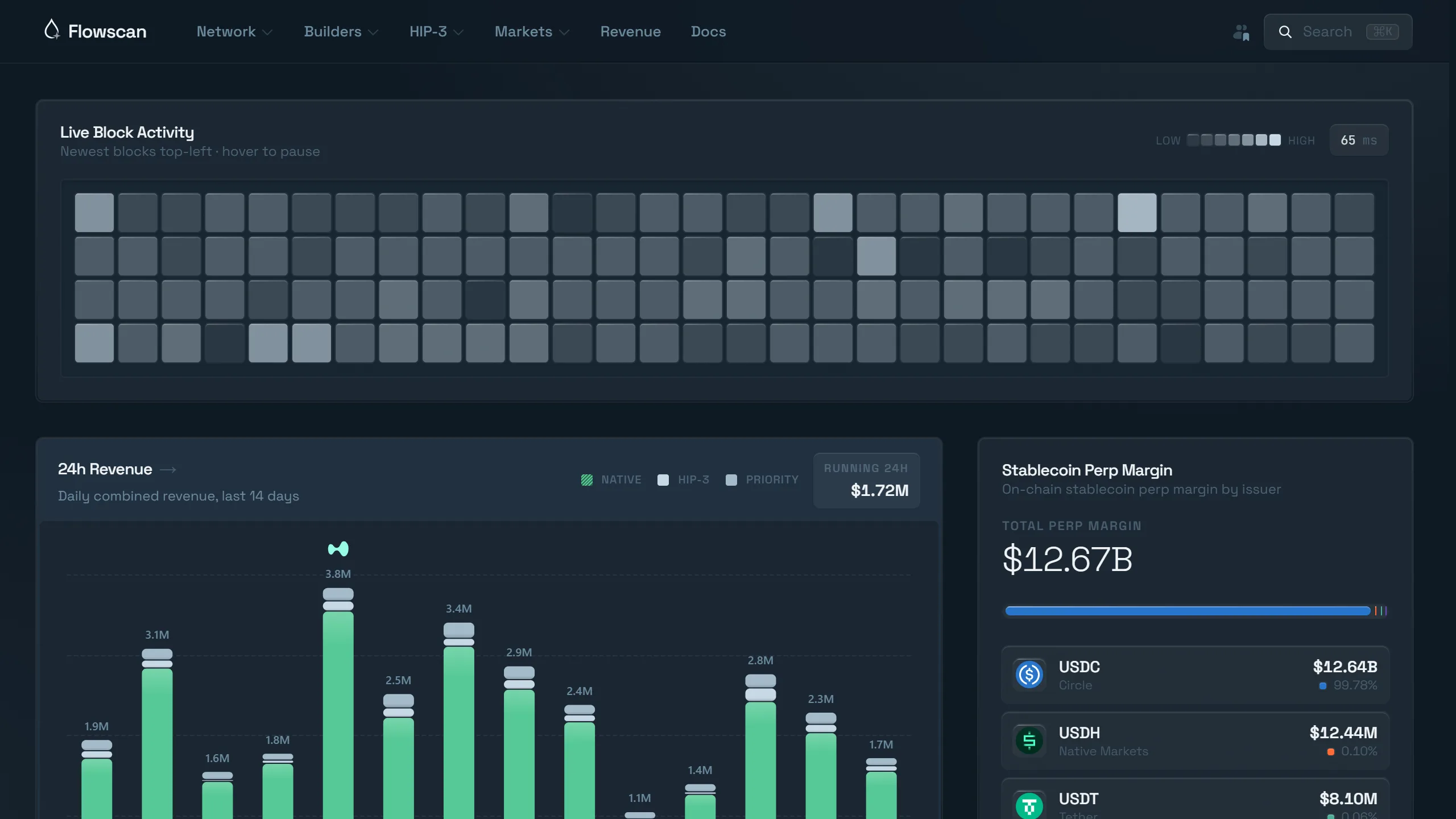
Source: Flowscan, used under fair use for educational purposes
How It Has Changed Since Launch
- Apr 13, 2026: Priority fees go live on mainnet "in Alpha mode", per Jeff Yan's Discord announcement as reported by Odaily. Write priority covers IOC orders on HIP-3 markets, and the maximum time-sensitive rate is cut from 20 bps to 8 bps after feedback.
- Jul 8, 2026: The docs extend write priority to ALO orders on testnet.
- Jul 12, 2026: ALO and IOC priority both live on mainnet.
- Oct 20, 2026: Hyperliquid's weekly update points developers to its API announcements channel for "updates to write priority fees."
The current docs no longer limit write priority to HIP-3 markets. Any non-outcome market qualifies.
As for the October change, crypto.news reported a testnet update that sets a minimum of 10 HYPE in delegated stake to use IOC and ALO priority. It also said accounts outside Standard account mode, and accounts sending CoreWriter actions directly, would lose mempool priority. The report says this is on testnet only and not yet in the docs, and we have not confirmed it against the announcement itself. Treat it as reported, not settled.
Should You Use Priority Fees?
If you trade from the app, you don't need to. Every source we found describes it as an API feature, and nothing about a normal market or limit order changes.
If you run a bot, the question is whether the speed is worth more than the fee. A few rules of thumb from the mechanics:
- IOC priority makes sense when being 50 to 300 ms earlier changes whether you get filled at all, such as when reacting to a move on another venue. On a slow strategy it is a pure cost.
- ALO priority only helps in the 400 ms after a price level forms or changes. It costs the same whether you fill or not, so it suits makers who are filled often at the front of the queue.
- The fee comes from undelegated staking balance, so you need HYPE staked and set aside for it. That HYPE earns no staking rewards while it sits undelegated (see our staking guide).
For everyone else, the practical point is the queue. On fast-moving markets the front of the book increasingly belongs to whoever pays, and a hand-placed post-only order should expect to wait behind them.
Start Trading on Hyperliquid
Market and limit orders from the app, with no priority fees and no gas. Get a 4% lifetime fee discount through our referral link.
Start TradingFrequently Asked Questions
Optional fees, paid in HYPE, that buy speed. Read (gossip) priority is an auction for receiving block data from nodes sooner. Write (order) priority is a per-order rate that gets immediate-or-cancel orders processed sooner, or moves post-only maker orders up the queue at a price level. Both kinds are burned.
Not unless you choose to. They are an API feature that you opt into by adding a priority rate to an order, and the fee is drawn from undelegated staked HYPE. Ordinary orders pay only the normal trading fee.
You set the rate. It is charged as a fraction of notional: on filled notional for IOC orders and on resting notional for post-only (ALO) orders, converted to HYPE at the spot price. Hyperliquid's docs say each basis point buys about 45 milliseconds on an IOC order, up to 8 basis points. A 1 bp rate on a $100,000 IOC fill costs $10.
Yes. Hyperliquid's documentation says both gossip priority fees and order priority fees are burned, the same treatment as the protocol's deployment auction fees.
They change who gets filled first, not the price you see. A post-only order you place by hand can be passed in the queue by a later order that paid ALO priority within 400 milliseconds of it. Market orders sent from the app are not slowed down, but faster traders who pay can react to price moves before you do.
Independent resource: Hyperliquid Guide is an independent, third-party resource operated by Concept211. It is not affiliated with, produced by, reviewed by or endorsed by Hyper Foundation, Hyperliquid Labs or any other Hyperliquid-ecosystem entity. "Hyperliquid" and related names and marks belong to their respective owners and are used here only to identify the platform this site documents. Read the full disclaimer.
Not advice: Nothing on this site is legal, tax, financial or investment advice. Descriptions of regulatory status, tax treatment and market availability are general information that varies by jurisdiction and changes over time. Confirm anything that matters to you with a qualified professional and against primary sources. Trading perpetual futures involves substantial risk of loss, and past performance does not indicate future results.
Disclosure: this site contains referral links. Signing up through the 4% lifetime fee discount link earns us a share of the trading fee Hyperliquid already charges, at no extra cost to you.
Ready to Start Trading?
Join Hyperliquid with our referral link and get a 4% lifetime fee discount. No KYC, no email - just connect your wallet and trade.
Start Trading - Save 4%