AQAv2 Explained — USDC Becomes Hyperliquid's Aligned Quote Asset
Table of Contents
- What Is AQAv2?
- Where AQAv2 Applies
- The Coinbase + Circle Deal
- How the Yield Share Flows Onchain
- What This Means for USDH
- The USDH Migration Grant Program
- AQAv1 vs. AQAv2 — What Actually Changed
- What HIP-3 Deployers Should Know
- What This Means for HIP-4 and Canonical Markets
- What Should Users Do?
- The Bigger Picture
 Hyperliquid
Info
Where this comes from. This page summarizes the public AQAv2 announcement and subsequent public statements. Everything below about the roles, obligations, commitments and commercial arrangements of Coinbase, Circle, Native Markets and the Hyper Foundation is a reading of those public statements, not information this site has independently verified or has any inside view of. Specs and terms change. Check Hyperliquid's own documentation and each company's own announcements before relying on any detail here.
On May 14, 2026, Aligned Quote Asset v2 (AQAv2) was announced: a spec for designating which stablecoins can be used as quote assets on HIP-4 and validator-operated perp markets. The headline change is that AQAv2 extends aligned status to stablecoins that are not exclusive to Hyperliquid, including USDC. Per the announcement, Coinbase is designated treasury deployer and Circle technical deployer, with both staking HYPE.
The practical consequence is that USDC — already roughly 95% of stablecoin deposits on Hyperliquid — becomes the most aligned stablecoin on the platform under this spec. USDH, the stablecoin launched by Native Markets in September 2025, has sunset, with USDH-denominated markets on HyperCore having completed settlement. Public statements also described Coinbase acquiring rights to the USDH brand assets; the terms of that arrangement are between the parties involved and are not something this site can speak to.
What Is AQAv2?
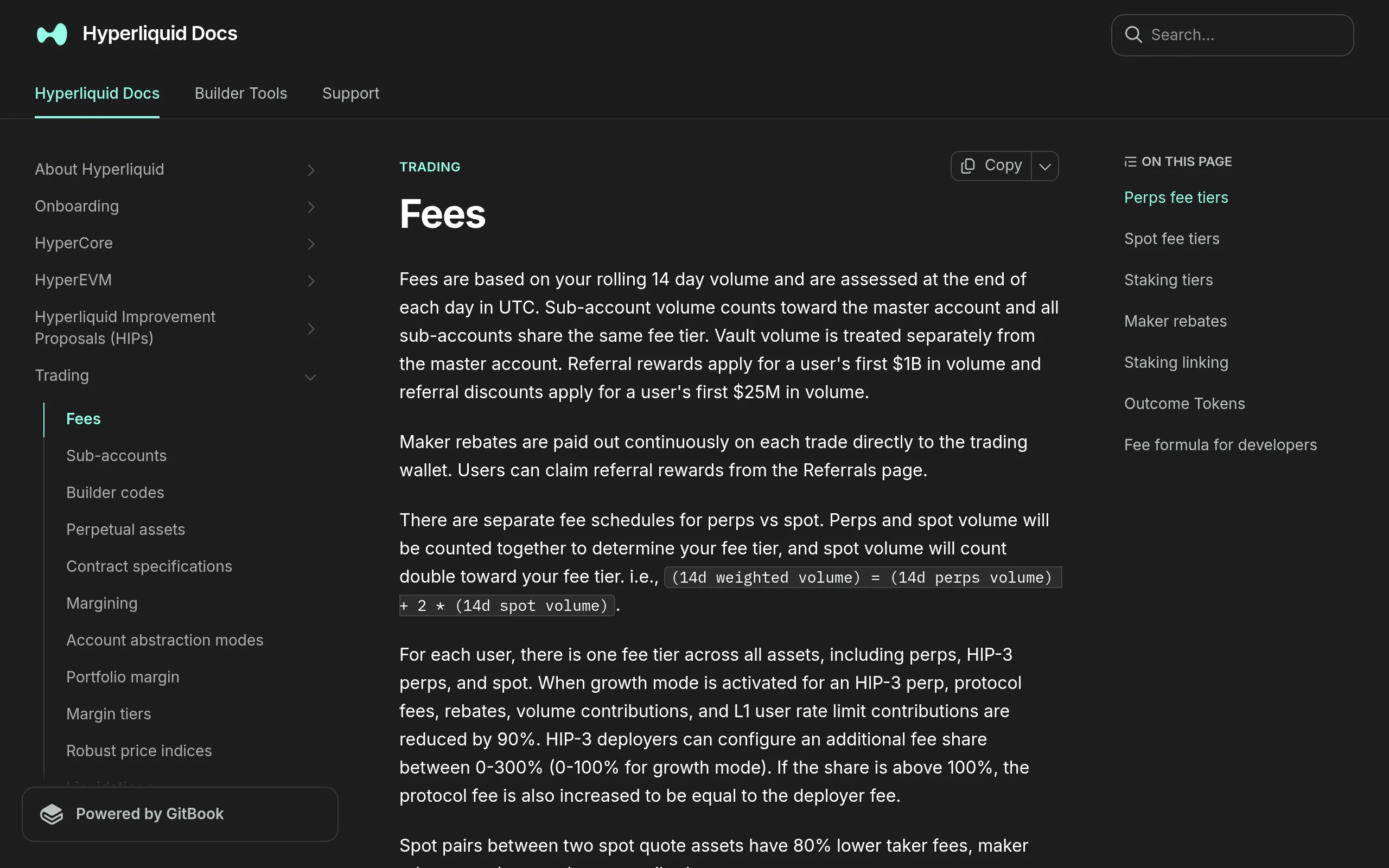
The original "aligned quote asset" designation, introduced when USDH launched, required a stablecoin to be exclusive to Hyperliquid and route reserve yield back to the protocol through a competitive deployer process. USDH was the only asset that qualified. Aligned status came with trader-facing fee discounts — 20% lower taker fees, 50% higher maker rebates, and a 20% volume credit bonus on aligned-pair trading.
AQAv2 is a fundamentally different design. It splits the deployer role in two, raises the staking requirement, doubles the revenue share rate, and removes the exclusivity constraint. It is intended specifically as the gating mechanism for canonical (HIP-4) outcome markets and validator-operated perp markets — the most important markets on the platform — while leaving spot markets and HIP-3 builder perps free to use any quote asset.
The spec defines two roles:
- Treasury deployer. Designates a treasury address that shares 100% of the AQA rate (the cost-adjusted onchain reference rate oracle) with the protocol through the onchain AQA mechanic. This is twice the rate of revenue share of the existing AQA spec. Must stake 500,000 HYPE, which is slashable if the treasury address does not have sufficient balance for onchain revenue to be deducted.
- Technical deployer. Responsible for reliable mint, redemption, and cross-chain transfer infrastructure for the aligned quote asset. Also stakes 500,000 HYPE, slashable if technical obligations are not met.
Under AQAv2, the HyperEVM contract that connects to HyperCore (the bridge that mints HyperCore representations of stablecoin balances) also rebalances with the treasury address. The HyperEVM balance corresponding to minted HyperCore tokens is held in a 9:1 ratio between the treasury deployer's linked EVM contract and the technical deployer's linked EVM contract. Concretely, USDC balance is split between the technical deployer's linked contract (0x6b9e773128f453f5c2c60935ee2de2cbc5390a24) and the treasury address (0xc20699185c15D0a2fD65779BB5d69f5b0B113c00) in a 1:9 ratio — 90% sits in the treasury. System transactions execute automatically on every HyperEVM block to keep the two balances aligned, so the split is maintained continuously without any manual rebalancing.
Info
Where AQAv2 Applies
| Market type | Quote asset requirement |
|---|---|
| HIP-4 canonical outcome markets | AQAv2-aligned (USDC after upgrade) |
| Validator-operated perp markets | AQAv2-aligned (USDC after upgrade) |
| HIP-3 builder perps | Any quote asset (builder's choice) |
| Spot markets | Any quote asset |
This split matters. Canonical perps and HIP-4 outcome markets are the largest, most-traded venues on Hyperliquid. Forcing those to use an AQAv2-aligned stablecoin guarantees that the protocol captures yield from the deepest liquidity pools. Meanwhile, HIP-3 deployers retain full flexibility over their own quote-asset choice, which preserves the permissionless surface area that has driven HIP-3 growth.
The Coinbase + Circle Deal

Source: Coinbase — used under fair use for editorial commentary.
Coinbase is activating AQAv2 on USDC as the treasury deployer. The treasury deployer commits 100% of the AQA rate — the cost-adjusted onchain reference rate that the protocol uses as the oracle for reserve yield — to the Hyperliquid protocol through the onchain AQA mechanic. In practical terms, Coinbase will route the vast majority of yield generated on USDC reserves held against Hyperliquid balances back into the protocol, instead of retaining it as corporate revenue.
 Circle, the issuer of USDC, serves as the technical deployer. Circle's existing infrastructure — particularly CCTP (Cross-Chain Transfer Protocol) and native cross-chain bridging — is what makes USDC viable as a canonical quote asset across HyperCore and HyperEVM. The technical deployer role explicitly covers reliable mint, redemption, and cross-chain transfer, which is exactly Circle's existing operational mandate for USDC.
Source: Circle — used under fair use for editorial commentary.
Both companies are staking HYPE — 500K each — bringing the total bonded HYPE for USDC's aligned status to 1 million HYPE. At a HYPE price in the $40–50 range, that is on the order of $40–50 million of slashable collateral backing the alignment commitment. The stakes are slashable for distinct reasons:
- Coinbase's stake can be slashed if the treasury address lacks sufficient balance for the protocol to deduct onchain revenue (i.e., Coinbase fails to honor the yield-share commitment).
- Circle's stake can be slashed if mint, redemption, or cross-chain infrastructure fails materially.
How the Yield Share Flows Onchain
The "100% of the AQA rate" commitment is best understood net of costs: under AQAv2, stablecoin deployers share approximately 90% of cost-adjusted reserve yield revenue on their Hyperliquid supply with the protocol. The AQA rate is the cost-adjusted onchain reference oracle, so committing 100% of that rate works out to roughly 90% of the raw reserve yield once issuer costs are netted out — the two framings describe the same flow.
The mechanic runs on a fixed cadence rather than streaming continuously:
- Reserve yield accrues in 30-day intervals. Each interval's revenue is tallied against the treasury balance held on HyperEVM.
- Payment lands 8 days after each interval completes. The accrued revenue is automatically sent to the Assistance Fund — the same onchain treasury that buys HYPE on the open market and burns it.
- A built-in grace period front-loads the rollout. AQAv2 yield accrual begins August 26, and the first payment is made October 3. The gap between those dates is the implementation grace period baked into the spec.
Info
What This Means for USDH
Native Markets — the team that won the USDH validator vote in September 2025 — has agreed to terms granting Coinbase the right to purchase the USDH brand assets. The pioneering work of Native Markets in launching USDH as the first production-scale stablecoin sharing yield directly with a protocol in a purely onchain implementation is what made AQAv2 possible. The learnings and mechanics from USDH live on in AQAv2.
How the transition played out:
- USDH-denominated markets on HyperCore have completed settlement — the sunset is now done.
- USDH remained fully backed throughout. Feeless USDH→USDC conversion is available on HyperEVM via Across, and USDH can be swapped to USDC on the HyperCore spot order book.
- USDC has taken over as the aligned quote asset for canonical markets.
- The Hyper Foundation committed ~$10M in grants to affected builders — HIP-1 spot deployers, HIP-3 perp deployers, HyperEVM protocols, dedicated USDH:USDC bridges, and Native Markets — to offset migration costs. See the grant program breakdown below.
Warning
The reasoning for the change, as stated in the announcement, is that user and builder feedback has been consistent that fragmentation leads to a degraded experience. With ~95% of deposits already in USDC, having USDH and USDC operate as parallel quote-asset systems split liquidity across two stablecoins. AQAv2 collapses that into a single canonical asset while preserving — and in fact doubling — the protocol's claim on reserve yield. The community no longer needs to choose between liquidity depth and protocol alignment.
The USDH Migration Grant Program
The Hyper Foundation committed approximately $10 million in grants to builders impacted by the USDH sunset — both to offset the real cost of migrating and to recognize the work involved in an orderly transition. Importantly, this is not an open application process: the Foundation contacted and worked directly with every eligible recipient. Grant recipients committed to completing their migration or wind-down before the end of July 2026.
Grants fall into two categories:
| Migration grant | Wind-down grant | |
|---|---|---|
| Who it is for | Teams migrating affected USDH markets/deployments to USDC | Teams retiring USDH-dependent operations instead of migrating |
| Relative size | Full sizing | Below an equivalent migration grant |
| Commitment | Orderly migration before end of July 2026 | Orderly wind-down before end of July 2026 |
Eligibility spans every category of team that built on USDH:
- HIP-1 spot deployers — grants sized on auction deployment costs.
- HIP-3 perp deployers — grants sized on auction deployment costs.
- HyperEVM protocols — grants sized on the USDH TVL affected by the sunset.
- Dedicated USDH:USDC bridges — infrastructure that moved USDH liquidity between layers.
- Native Markets — recognized for pioneering USDH as the first production-scale, protocol-aligned stablecoin sharing reserve yield onchain.
AQAv1 vs. AQAv2 — What Actually Changed
| AQAv1 (USDH) | AQAv2 (USDC) | |
|---|---|---|
| Exclusivity to Hyperliquid | Required | Not required |
| Yield share rate to protocol | 50% (Native Markets) | 100% of AQA rate (2x) |
| Deployer roles | Single deployer | Treasury + technical (split) |
| HYPE staking requirement | 200,000 HYPE | 500,000 HYPE per role (1M total) |
| Trader fee perks on aligned pairs | 20% lower taker / 50% higher maker | None — standard fees apply |
| Volume credit bonus | 20% extra credit toward tiers | None |
| Required for HIP-4 canonical markets | Yes | Yes (after upgrade) |
| HyperEVM balance ratio | N/A | 9:1 treasury : technical |
The two specs are doing different jobs. AQAv1 tried to be both a yield-routing mechanism and a trader incentive — it gave you cheaper fees if you used the aligned asset. AQAv2 narrows the goal to pure yield routing. The fee discounts are gone, but the protocol's claim on reserve yield doubles, the slashable stake more than quadruples in absolute terms, and the asset is no longer required to be exclusive to Hyperliquid. The trade-off is intentional: less friction for traders to adopt, more economic alignment from the issuer side.
Start Trading on Hyperliquid
Sign up through our referral link for a 4% lifetime fee discount — applied to every USDC trade you make.
Get 4% Fee DiscountWhat HIP-3 Deployers Should Know
HIP-3 markets — perps deployed by third-party builders on top of Hyperliquid's order book — are explicitly exempt from the AQAv2 quote-asset requirement. The announcement is clear: "Other quote assets will continue to be supported for other markets, including spot and HIP-3 perps." Existing HIP-3 deployments like  trade.xyz and Felix's commodity markets can continue using whatever quote asset they chose.
For HIP-3 builders who integrated USDH specifically, the Hyper Foundation's ~$10M grant program covers the transition cost to USDC — with HIP-3 grants sized on auction deployment costs. The Foundation contacted eligible deployers directly, and the orderly transition completes before the end of July 2026. If you are running a HIP-3 deployment that uses USDH today, the practical steps are:
- Confirm your grant directly with the Foundation — recipients were contacted individually; this is not an open application.
- Plan a quote-asset migration if your market would benefit from sharing the deeper USDC liquidity pool, even though it is not required.
- Communicate with your users about timing — feeless USDH→USDC conversion makes the transition mechanically simple but UI/integration changes still take effort.
What This Means for HIP-4 and Canonical Markets
HIP-4 outcome trading launched on May 2, 2026 with USDH as the settlement currency for the first recurring binary BTC market. AQAv2 is the gating mechanism that determines what USDH gets replaced by — and the answer is now clear: USDC, on a future network upgrade.
The implications for outcome markets specifically:
- Deeper natural liquidity. Outcome markets settle in the same asset that already represents 95% of deposits. No friction converting in or out, no need to maintain a separate USDH stack.
- Cross-margin remains intact. HIP-4 outcome positions share collateral pools with perpetual positions. With USDC as the common quote asset for both, that prime-brokerage-style composability becomes even more natural.
- No change to the recurring binary BTC market structure. Settlement to the Hyperliquid BTC mark price, daily at 06:00 UTC, fully collateralized — none of that changes. Only the denomination changes.
- Multi-outcome markets, split, and negate operations all carry over directly to USDC denomination. The mechanics are quote-asset-agnostic.
Validator-operated perp markets — the canonical BTC, ETH, SOL, and HYPE perps that anchor Hyperliquid's volume — are also in scope for the AQAv2 quote-asset requirement. In practice, those markets already settle in USDC for users with USDC collateral, so the visible change for traders is minimal. The structural change is on the issuer side: Coinbase and Circle are now bonded to share yield back to the protocol.
That alignment reaches the HIP-3 equity markets too, since they already quote in USDC. A trader holding the SNDK/USDC market and a HIP-4 outcome position draws on one collateral pool in one denomination, with no conversion step between them.
What Should Users Do?
For the vast majority of Hyperliquid users — anyone holding USDC, trading canonical perps, depositing via bridge or fiat ramps — the practical answer is nothing. You are already using the asset that will become AQAv2-aligned. The change happens at the issuer level, not at your wallet level.
For users who held USDH or traded USDH-denominated pairs:
- Convert your USDH to USDC now. USDH-denominated markets on HyperCore have completed settlement. Swap on the spot order book (HyperCore) or 1:1 with no fees via Across (HyperEVM), and clear any USDH positions in Borrow/Lend.
- USDH remained fully backed throughout the wind-down — conversions are feeless.
- Re-evaluate any strategies that depended on AQAv1 fee perks — the 20% lower taker / 50% higher maker / 20% volume credit benefits do not carry over to AQAv2.
For builders who integrated USDH into a product (HIP-3 perps, DeFi protocols on HyperEVM, front-end apps):
- Check your eligibility for the ~$10M Hyper Foundation grant program — the Foundation contacted eligible recipients directly (HIP-1, HIP-3, HyperEVM protocols, USDH:USDC bridges, and Native Markets), with migration and wind-down grants both closing before the end of July 2026.
- Plan integration updates to handle USDC as the primary quote asset alongside or in place of USDH.
- Keep USDH support for spot pairs if it serves your users — that surface area is preserved.
Tip
The Bigger Picture
Source: Hyperliquid docs — used under fair use for editorial reference.
USDH was an experiment that worked. It proved that a protocol could win a competitive validator vote, attract serious institutional partners (BlackRock, Superstate, Stripe's Bridge), and operate a production-scale stablecoin where reserve yield flows back to the protocol via an onchain mechanic. The pioneering work behind USDH made AQAv2 viable — without USDH, there would be no proven template to point to when negotiating with Coinbase and Circle.
What changed between September 2025 and May 2026 is that incumbent stablecoin issuers got willing to play by Hyperliquid's rules rather than the other way around. AQAv2 is what that looks like in spec form: the protocol no longer needs a custom-built stablecoin to capture reserve yield because the dominant existing stablecoin is willing to share it. With ~95% of deposits already in USDC, that is a massive simplification of liquidity, UX, and integration surface area.
The number to watch over the next quarters is what fraction of USDC reserves on Hyperliquid actually generates yield share once the network upgrade ships. At current deposit levels of several billion USDC, even a few percentage points of yield share routes tens of millions of dollars per year back into the protocol — funding HYPE buybacks, ecosystem grants, and validator economics on a continuous basis. That is the trade Coinbase and Circle are making, and 1 million HYPE of slashable collateral is what bonds them to it.
Trade Canonical Perps on Hyperliquid
USDC stays USDC. Get a 4% lifetime fee discount stackable with every tier and every market on the platform.
Join HyperliquidFrequently Asked Questions
AQAv2 (Aligned Quote Asset v2) is Hyperliquid's next-generation spec for designating which stablecoins can be used as quote assets on HIP-4 and validator-operated perp markets. Unlike the original spec, AQAv2 extends aligned status to stablecoins that are not exclusive to Hyperliquid, provided the deployers share the vast majority of reserve yield with the protocol through an onchain mechanic and stake 500,000 HYPE as collateral.
According to the public AQAv2 announcement, Coinbase is designated as the treasury deployer for USDC, sharing 100% of the AQA rate (the cost-adjusted onchain reference yield) with the protocol, and Circle as the technical deployer responsible for CCTP and cross-chain infrastructure, with both staking HYPE. This page summarizes that announcement and is not a description of any agreement between those companies, which this site has no visibility into — verify current terms against Hyperliquid's and each company's own published statements.
The USDH sunset is complete — all USDH-denominated markets on HyperCore have finished settlement, with USDC now the aligned quote asset for HIP-4 markets. If you still hold USDH, swap it to USDC: on HyperCore via the spot order book, or on HyperEVM 1:1 with no fees via Across. Withdraw any supplied USDH from Borrow/Lend and repay any borrowed USDH. Coinbase secured rights to purchase the USDH brand assets from Native Markets, and the Hyper Foundation committed roughly $10 million in grants to affected builders — HIP-1 spot deployers, HIP-3 perp deployers, HyperEVM protocols, dedicated USDH:USDC bridges, and Native Markets — to offset migration costs, with the orderly transition completing before the end of July 2026.
As announced publicly, a grant program of roughly $10 million was made available to builders affected by the USDH sunset, covering migration grants for teams moving USDH deployments to USDC and wind-down grants for teams retiring USDH-dependent operations. Named categories of recipient included HIP-1 spot deployers, HIP-3 perp deployers, HyperEVM protocols, USDH:USDC bridges, and Native Markets. For the current terms, eligibility, and process, refer to the Hyper Foundation's own published announcements rather than this summary — this site is not involved in the program and cannot confirm its details.
AQAv2 splits stablecoin deployment into two roles. The treasury deployer designates a treasury address that shares 100% of the AQA rate with the protocol through the onchain AQA mechanic — this is Coinbase for USDC. The technical deployer ensures reliable mint, redemption, and cross-chain transfer infrastructure — this is Circle. Both roles must stake 500,000 HYPE, which is slashable if obligations are not met. The HyperEVM contract holds minted balances in a 9:1 ratio between treasury and technical deployer addresses.
No. AQAv2 has no trading fee or volume contribution benefit. The original USDH aligned-quote-asset spec gave traders 20% lower taker fees, 50% higher maker rebates, and 20% bonus volume credit. AQAv2 does not carry those direct trader incentives — the alignment value flows entirely through reserve yield sharing back to the protocol. Standard Hyperliquid fee tiers still apply on USDC-denominated markets.
AQAv2 is required for quote assets on HIP-4 (canonical outcome / prediction markets) and validator-operated perp markets in a future network upgrade. Other quote assets continue to be supported elsewhere — spot markets and HIP-3 builder-operated perps can use any quote asset. So USDC becomes the standard for canonical markets, while builders deploying HIP-3 markets retain flexibility.
AQAv2 includes a built-in implementation grace period. Reserve yield accrual begins on August 26, and the first payment is made on October 3. After that, reserve yield revenue accrues in 30-day intervals and is automatically sent to the Assistance Fund 8 days after each interval completes. The Assistance Fund uses that revenue — alongside trading-fee revenue — to buy HYPE on the open market and burn it.
USDC balance between the technical deployer's linked contract (0x6b9e773128f453f5c2c60935ee2de2cbc5390a24) and the treasury address (0xc20699185c15D0a2fD65779BB5d69f5b0B113c00) is held in a 1:9 ratio — 90% in the treasury. System transactions execute automatically on every HyperEVM block to keep the two balances aligned, so no manual rebalancing is required.
Independent resource: Hyperliquid Guide is an independent, third-party resource operated by Concept211. It is not affiliated with, produced by, reviewed by or endorsed by Hyper Foundation, Hyperliquid Labs or any other Hyperliquid-ecosystem entity. "Hyperliquid" and related names and marks belong to their respective owners and are used here only to identify the platform this site documents. Read the full disclaimer.
Not advice: Nothing on this site is legal, tax, financial or investment advice. Descriptions of regulatory status, tax treatment and market availability are general information that varies by jurisdiction and changes over time. Confirm anything that matters to you with a qualified professional and against primary sources. Trading perpetual futures involves substantial risk of loss, and past performance does not indicate future results.
Disclosure: this site contains referral links. Signing up through the 4% lifetime fee discount link earns us a share of the trading fee Hyperliquid already charges, at no extra cost to you.
Ready to Start Trading?
Join Hyperliquid with our referral link and get a 4% lifetime fee discount. No KYC, no email - just connect your wallet and trade.
Start Trading - Save 4%