Hyperliquid vs Coinbase Advanced (2026): DEX vs CEX for Perps & Spot
Table of Contents
- Hyperliquid vs Coinbase: Two Different Philosophies
- Fee Comparison
- Markets and Trading Products
- Hyperliquid: Perpetual Futures Powerhouse
- Coinbase: Spot Trading with Limited Futures
- Custody and Security
- Coinbase: Custodied Funds
- Hyperliquid: Self-Custody
- KYC and Privacy
- US Availability
- Head-to-Head Summary
- The Verdict
 Hyperliquidvs
 Coinbase
| Feature | Hyperliquid | Coinbase Advanced |
|---|---|---|
| Trading Fees (Taker) | 0.045% | 0.060% |
| Trading Fees (Maker) | 0.015% | 0.040% |
| Perpetual Futures | 200++ markets, up to 40x | Limited (BTC, ETH futures only) |
| Spot Trading | Yes | Yes (250+ assets) |
| Custody Model | Self-custody (non-custodial) | Custodied by Coinbase |
| KYC Required | No | Yes (full identity verification) |
| Gas Fees | Zero | Network fees on withdrawals |
| US Availability | Geo-blocked at frontend | Fully available |
Tip
The Core Difference: Hyperliquid is a non-custodial DEX built for perpetual futures traders who want low fees, high leverage, and self-custody. Coinbase is a regulated US exchange built for compliance-first users who primarily trade spot. They serve different audiences — this guide helps you understand which fits your needs.
Hyperliquid vs Coinbase: Two Different Philosophies
Hyperliquid and Coinbase represent opposite ends of the crypto exchange spectrum. Hyperliquid is a fully decentralized, non-custodial perpetual futures exchange with no KYC, no email, and no account creation. Coinbase is a publicly traded, CFTC/SEC-regulated centralized exchange (NASDAQ: COIN) with full identity verification, FDIC-insured USD balances, and institutional-grade compliance infrastructure.
This is not a comparison of two equivalent products. It is a comparison of two fundamentally different models — and the right choice depends entirely on what matters most to you as a trader.
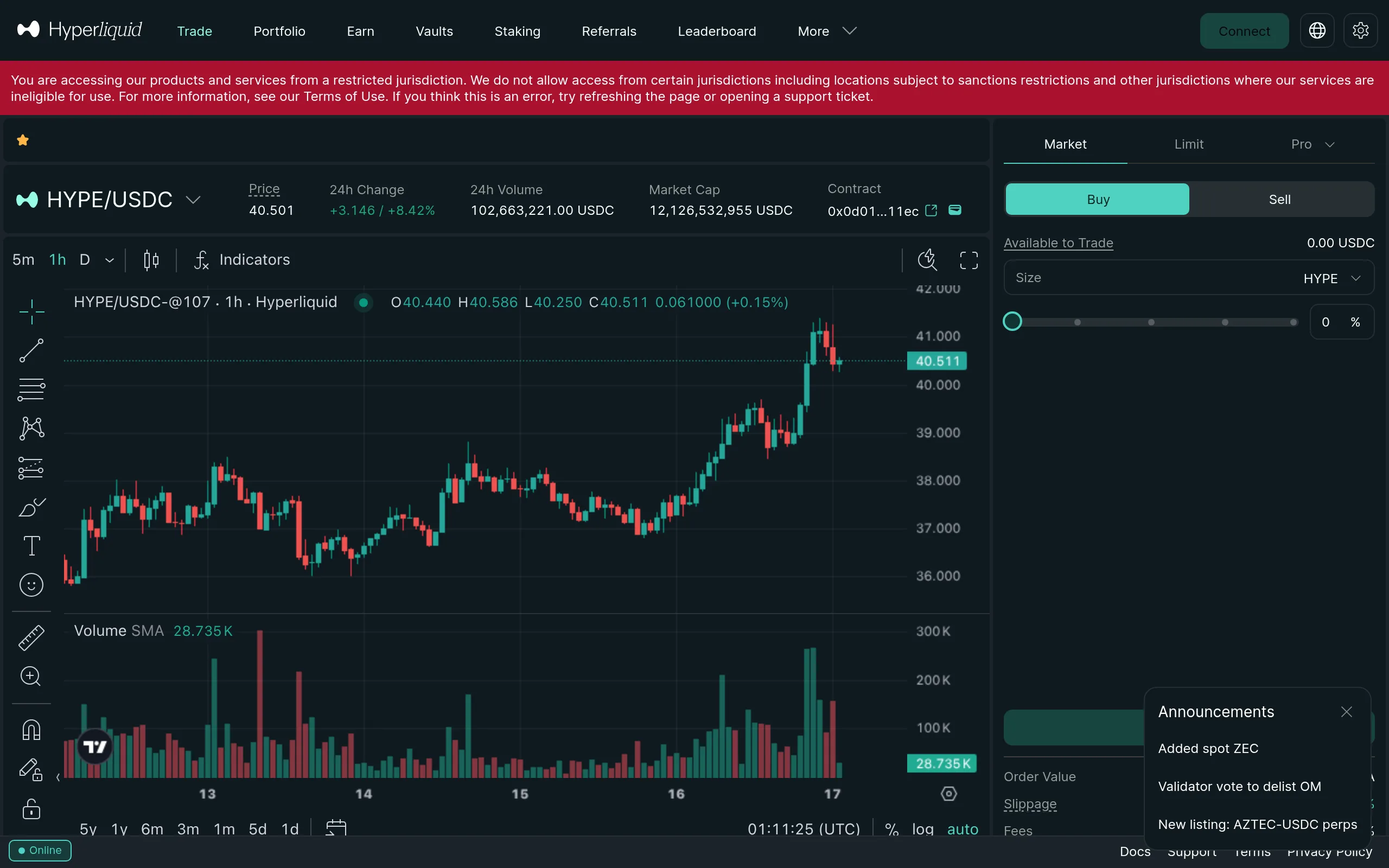
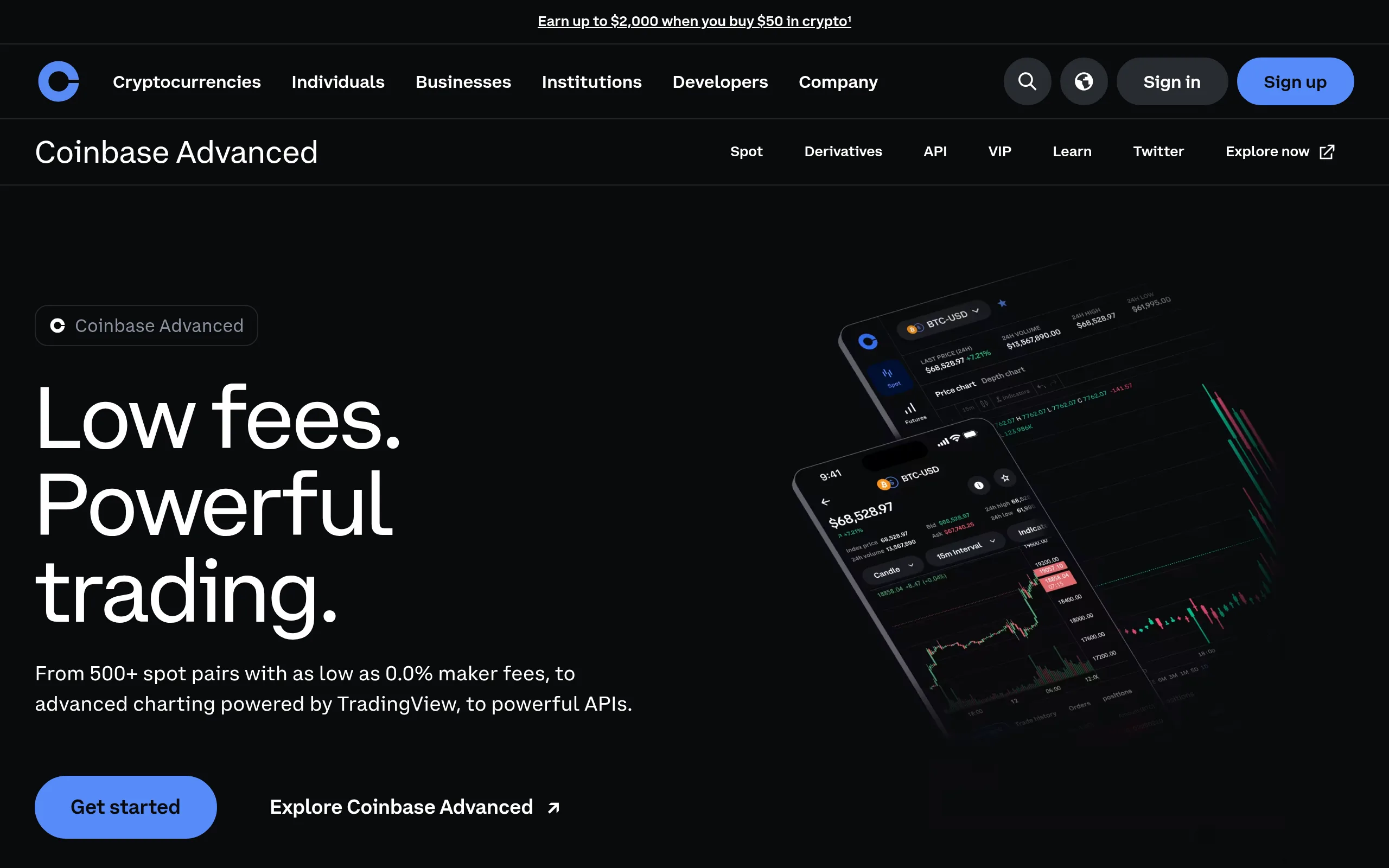
Lower Fees, Self-Custody, No KYC
Hyperliquid charges roughly half of Coinbase's taker fees with zero gas costs. Sign up with our referral link for an additional 4% discount on your first $25M of volume.
Start Trading on HyperliquidFee Comparison
According to Coinbase's published fee schedule, Coinbase Advanced Trade charges 0.060% taker and 0.040% maker fees at the base tier, with volume-based tiers that reduce rates for high-volume traders. According to Hyperliquid's fee documentation, perpetual taker fees start at 0.045% and maker fees at 0.015% at base tier.
| Hyperliquid | Coinbase Advanced | |
|---|---|---|
| Taker Fee (Base) | 0.045% | 0.060% |
| Maker Fee (Base) | 0.015% | 0.040% |
| Gas Fees | Zero | Network fees on withdrawals |
| Deposit Fee | Free | Free (ACH/wire) |
| Withdrawal Fee | 1 USDC flat | Network-dependent |
| Referral Discount | 4% (first $25M) | Varies |
On a $10,000 taker trade:
- Hyperliquid: $4.50 in fees
- Coinbase Advanced: $6.00 in fees
That is a 33% savings on Hyperliquid. Over 100 trades per month, the difference compounds to $150+ in savings — before factoring in Hyperliquid's zero gas fees and the 4% referral discount. With referral code Concept211, Hyperliquid's effective taker rate drops to 0.0432%. Get 4% Fee Discount
For a detailed breakdown of all Hyperliquid fee tiers and stacking discounts, see our complete fee guide and fee tiers guide.
Markets and Trading Products
This is where the two platforms diverge most sharply.
Hyperliquid: Perpetual Futures Powerhouse
Hyperliquid lists 200+ perpetual futures markets with leverage up to 40x on BTC (25x on ETH). It also offers spot trading for a growing list of assets. New markets are added rapidly through a permissionless listing mechanism.
Hyperliquid's order types include market, limit, stop-loss, take-profit, scaling orders, and TWAP — professional-grade tools that are uncommon on most exchanges.
Coinbase: Spot Trading with Limited Futures
Coinbase Advanced Trade is primarily a spot exchange with 250+ crypto assets available for trading. For derivatives, Coinbase offers a limited set of crypto futures (primarily Bitcoin and Ethereum) through its CFTC-regulated Coinbase Derivatives Exchange, but these are standardized contracts with restricted leverage — not comparable to Hyperliquid's perpetual futures offering.
If you want to trade perpetual futures with high leverage across dozens of altcoins, Coinbase is not the platform. If you want straightforward spot buying and selling with fiat on-ramps, Coinbase is one of the most accessible options.
Custody and Security
Coinbase: Custodied Funds
Coinbase holds your assets in its own custody infrastructure. This means:
- FDIC insurance on USD balances (up to $250K)
- Crime insurance on a portion of digital assets held in hot storage
- Regulatory oversight from US federal and state authorities
- Account recovery is possible if you lose access
The trade-off: Coinbase controls your funds. In the event of a corporate crisis, regulatory freeze, or security breach, your access to funds depends on Coinbase's operations. The FTX collapse demonstrated that custodial exchanges can fail catastrophically.
Hyperliquid: Self-Custody
Hyperliquid is fully non-custodial. Your funds are secured by smart contracts on Hyperliquid's L1 blockchain. You interact through your own wallet, and your private keys are the only access control. There is no company holding your assets, no account to freeze, and no third party between you and your funds.
The trade-off: security is your responsibility. If you lose your private keys, no one can recover your funds. There is no customer support to call and no insurance on deposits. For traders who understand crypto self-custody, this is a feature, not a bug.
KYC and Privacy
Hyperliquid requires zero identity verification. No email, no phone number, no ID upload. Connect a wallet and trade. This is the standard model for decentralized exchanges. For traders who value privacy, see our guide on Hyperliquid's no-KYC approach.
Coinbase requires full KYC: government-issued photo ID, Social Security number (for US users), proof of address, and in some cases video verification. This is mandatory for all account types and is a regulatory requirement for Coinbase's US operating licenses.
US Availability
This is the most important practical difference for US-based traders.
Coinbase is fully available in the United States. It is licensed in all 50 states, regulated by the SEC and CFTC, and is one of the few crypto exchanges that is publicly listed on NASDAQ. US users can deposit via ACH, wire transfer, or debit card.
Hyperliquid's frontend geo-blocks US IP addresses as a regulatory precaution. The underlying protocol is permissionless, but the web interface at app.hyperliquid.xyz restricts US connections. For more details on how this restriction works, see our US availability guide. The CFTC has spent 2026 building a route for perpetual futures on regulated US venues, and Hyperliquid has been raised by name in that context — see Is Hyperliquid coming to the US? for what has and hasn't actually been announced.
For US users who want perpetual futures exposure specifically, the options are limited. Coinbase's regulated futures offering is minimal. Other options include CME Group's institutional Bitcoin/Ethereum futures or offshore exchanges with their own trade-offs.
Self-Custody Trading at Lower Fees
Trade perpetual futures on Hyperliquid with fees roughly half of Coinbase's. No KYC, no account creation, zero gas fees.
Start TradingHead-to-Head Summary
| Hyperliquid | Coinbase Advanced | |
|---|---|---|
| Exchange Type | Decentralized (DEX) | Centralized (CEX) |
| Taker Fee | 0.045% | 0.060% |
| Maker Fee | 0.015% | 0.040% |
| Perpetual Markets | 200+ | Limited (BTC, ETH) |
| Spot Markets | Growing | 250+ |
| Max Leverage | Up to 40x | Limited |
| KYC Required | No | Yes (full) |
| Custody | Self-custody | Custodied |
| US Availability | Geo-blocked | Fully available |
| Fiat On-Ramp | Via bridges/third-party | ACH, wire, debit |
| Gas Fees | Zero | Network fees |
The Verdict
These platforms serve fundamentally different audiences. Comparing Hyperliquid to Coinbase is like comparing a Formula 1 car to a luxury sedan — both are excellent at what they do, but they are built for different purposes.
Choose Hyperliquid if you want the lowest fees, perpetual futures with up to 40x leverage, self-custody of your assets, no KYC, and zero gas fees. Hyperliquid is built for active traders — especially those who trade perpetuals and want execution quality that rivals centralized exchanges.
Choose Coinbase if you are a US-based user who needs regulatory compliance, fiat on-ramps (ACH, wire), spot trading across 250+ assets, custodial protections with FDIC insurance, or a platform with customer support and account recovery.
Bottom line: For perpetual futures trading, Hyperliquid is the superior platform by every trading metric — lower fees, more markets, higher leverage, better execution. For spot trading with fiat on-ramps in a regulated US environment, Coinbase remains the gold standard. Many experienced traders use both: Coinbase for fiat on/off ramps and spot holdings, Hyperliquid for active perp trading.
For more comparisons, see our guides on Hyperliquid vs Binance, Hyperliquid vs dYdX, Hyperliquid vs Kraken, and Hyperliquid vs Bybit.
Trade Smarter with Lower Fees
Hyperliquid charges less than half of Coinbase's taker fees. Use our referral link for an additional 4% discount on your first $25M of volume.
Start Trading on HyperliquidFrequently Asked Questions
Coinbase is fully available to US users with KYC verification. Hyperliquid's frontend geo-blocks US IP addresses as a regulatory precaution. The underlying protocol is permissionless, but US users should be aware of the restrictions. Coinbase is the safer choice for US users who want regulatory compliance.
It depends on what you mean by safe. Coinbase is a publicly traded US company (NASDAQ: COIN) with FDIC-insured USD balances and regulatory oversight. Hyperliquid is a non-custodial protocol where your funds remain in your wallet — eliminating counterparty risk but placing security responsibility on you. Neither has suffered a loss of customer funds.
Coinbase offers limited crypto futures (Bitcoin and Ethereum) to US users through its CFTC-regulated Coinbase Derivatives Exchange. However, these are standardized contracts with limited leverage and fewer pairs — not comparable to Hyperliquid's 150+ perpetual markets with up to 40x leverage.
Hyperliquid is significantly cheaper. Taker fees are 0.045% on Hyperliquid vs 0.060% on Coinbase Advanced at base tier. Hyperliquid also charges zero gas fees, while Coinbase charges network withdrawal fees. With a referral code, Hyperliquid's effective taker rate drops to 0.0432%.
Yes. Both platforms use USDC as a primary trading and settlement asset. Coinbase is the co-issuer of USDC (via Circle). Hyperliquid uses USDC for margin, settlement, and deposits via the Arbitrum bridge.
Independent resource: Hyperliquid Guide is an independent, third-party resource operated by Concept211. It is not affiliated with, produced by, reviewed by or endorsed by Hyper Foundation, Hyperliquid Labs or any other Hyperliquid-ecosystem entity. "Hyperliquid" and related names and marks belong to their respective owners and are used here only to identify the platform this site documents. Read the full disclaimer.
Not advice: Nothing on this site is legal, tax, financial or investment advice. Descriptions of regulatory status, tax treatment and market availability are general information that varies by jurisdiction and changes over time. Confirm anything that matters to you with a qualified professional and against primary sources. Trading perpetual futures involves substantial risk of loss, and past performance does not indicate future results.
Disclosure: this site contains referral links. Signing up through the 4% fee discount link earns us a share of the trading fee Hyperliquid already charges, at no extra cost to you.
Ready to Start Trading?
Join Hyperliquid with our referral link and get a 4% fee discount on your first $25M of volume. No KYC, no email - just connect your wallet and trade.
Start Trading - Save 4%